Fort Oldham
Burleson County, TX
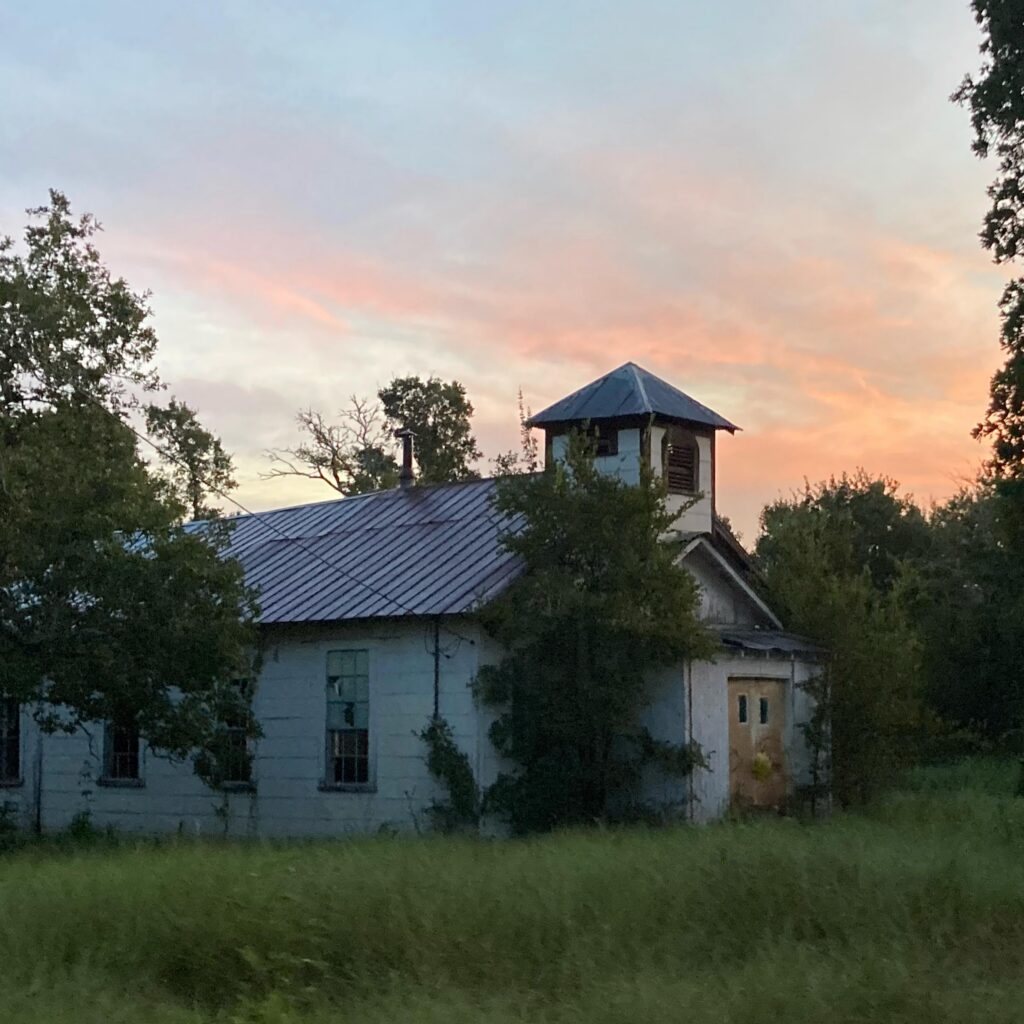
Status: Located
Year Established: 1878
Council of Governments: BVCOG
Public History: https://tshaonline.org/handbook/online/articles/qcf27:
“Fort Oldham, a mile east of Farm Road 1362 in central Burleson County, was a private fort and stopping place on the Independence-Tenoxtitlán road during the Republic of Texas. It was located on land belonging to Maj. William Oldham, who purchased it from Hendrick Arnold in September 1837. Fort Oldham was probably a fortified house built by Major Oldham on his property. Settlers in the area took refuge there during Indian alarms around 1837–38, but no record survives of the fort’s actually having been attacked. By July 1838 a post office was operating at the site, and in 1841 Fort Oldham was a station on post office route 22 (the route connecting Independence and Franklin via Mound Prairie, Fort Oldham, Tenoxtitlán, and Nashville). The site is on land still owned by black descendants of Major Oldham
William Oldham was born in Kentucky in 1798. He volunteered for the Texas army on October 8, 1835, and was elected a major in the Texian Infantry, Col. Philip A. Sublett commanding. He served in Capt. James G. Swisher’s company until December 22, 1835, and participated in the siege of Bexar. He also served in the First Company of Texas Cavalry, Capt. William W. Hill commanding, from May 29, 1836, to August 2, 1836. In September 1837 Oldham purchased 640 acres of land from Hendrick Arnold, a free black with whom he had fought at Bexar. The land was located in southeastern Burleson County (then Washington County). Major Oldham established his homestead there. During Indian alarms the settlers in the area took refuge at his home, which became known as “Fort Oldham.”
He hired a substitute for Edwin Morehouse’s expedition to Comanche Peak in 1838–39. On October 17, 1842, he volunteered for the Somervell expedition and was appointed paymaster of the regiment commanded by Col. James Cook. He also participated in the Mier expedition and was taken prisoner on December 25, 1842. During his captivity he was able to secure loans totaling $2,000 from a friend, an Englishman whom he had known in Kentucky, which he distributed among his “suffering fellow prisoners.” When the Texans tried to escape on February 11, 1843, Oldham, along with John Rufus Alexander, was able to make his way back to San Antonio on or about April 5, 1843. He returned to Fort Oldham and again was called on by the settlers in 1844 to fight Indians at “Battleground Prairie” near Cedar Creek on the Burleson-Milam county line. This was the last major fight with Indians in the county. In 1849 Major Oldham petitioned the Texas legislature for payment for his services and loss of property while serving in the army. He was finally reimbursed in 1856.”
https://www.tshaonline.org/handbook/entries/oldham-william:
“Oldham developed an extensive plantation in the Brazos bottom. In 1860 he was listed as one of the three wealthiest men in Burleson County, having property valued at $127,436, including thirteen slaves. Major Oldham died intestate on June 21, 1868, in Austin and was buried in Oaklawn Cemetery there. A relative, W. S. Oldham, Jr., of Houston, was appointed administrator of the estate. According to him, William Oldham had “neither wife nor children.” However, a beautiful mulatto named Phillis claimed that she had been his wife since 1839 and that she had borne him six sons. Oldham, Jr., claimed that she was just a slave and evicted her and her sons from the plantation. She sued the estate and was finally awarded homestead rights by the Burleson County Probate Court. Phillis and her children returned to the original log cabin at Fort Oldham. The site is known as the Oldham Settlement and is still owned by Major Oldham’s descendants. On August 7, 1871, A. W. McIver, a Caldwell lawyer, became the administrator of William Oldham’s estate. In addition to personal property, the major owned 5,685 acres of land in Burleson, Brazos, and Kaufman counties. His extensive estate, heavily burdened by debt, “suits pending and other unsettled business,” was not settled until 1882.”
Community History: There are no current community descriptions of Fort Oldham. Please consider sharing your own knowledge of the community with us.