Fourth Ward (Freedmen’s Town)
Harris County, TX
Status: Located
Year Established: 1865
Council of Governments: H-GAC
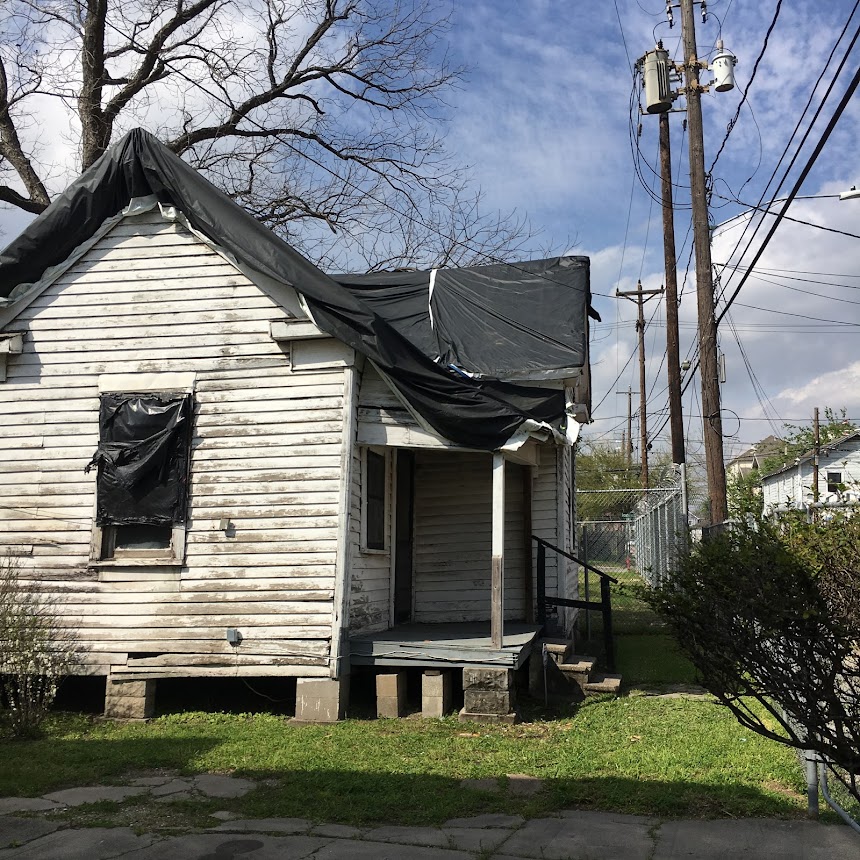
Public History: The Fourth Ward in Houston, also sometimes referred to as Freedmen’s Town, is one of that city’s most important African-American historic communities. During the late nineteenth and early twentieth centuries, it was the center of Black cultural and professional life in the city. By the early twentieth century it housed prominent educational institutions and the majority of the Black physicians and attorneys, while at night its bars and night spots attracted Whites and Blacks who came to hear great blues and jazz musicians. Blues guitarist B. B. King later termed the Fourth Ward night life the “breeding ground” for musicians Arnett Cobb and Sam (Lightnin’) Hopkins. The Houston city charter of 1839 organized the city into four wards. The fourth is located just southwest of downtown Houston, along the south bank of Buffalo Bayou. It extended south of Congress Avenue and west of Main Street to the city limits. Although the Fourth Ward was established as a political subdivision, and although at least through the nineteenth century it housed more Whites than Blacks, the area is best known as one of Houston’s oldest and most important Black neighborhoods. Initially it encompassed most of what is now downtown Houston west of Main Street, as well as the residential areas along San Felipe Street (now West Dallas) and West Grey that still are referred to as the Fourth Ward and are today almost exclusively Black in population.
The Fourth Ward emerged as Houston’s most prominent African-American neighborhood when thousands of freed slaves flooded into the city after emancipation. These newcomers settled on the fringes of the third, fifth, and fourth wards. The Freedmentown area north of San Felipe and the streets west of downtown not only attracted the largest number of the new Black residents but also housed the first Black churches, schools, and political organizations. Several factors combined to facilitate the subsequent growth of the Fourth Ward’s Black community. First, its location-southwest of downtown and on the San Felipe road, which connected the city with the Brazos River plantations-meant that it was situated on the major route that brought freedmen into the city. In addition, in the aftermath of the war many Whites who owned farmland on the outskirts of the city recognized the economic advantage of subdividing their land to provide housing lots or rental houses for the rapidly growing Black population. One former slave recalled that his owner, Charles S. Longcope, had assembled all of his slaves in June 1865, and, standing in his door of his Second Ward mansion, read them the proclamation that gave them their freedom; he then offered each of his former slaves a building lot in the Fourth Ward. Finally, the Fourth Ward provided a home to early Black religious and educational institutions. It had, in fact, achieved this distinction even before emancipation. In 1851 Black Methodists began worshiping in their own church, adjacent to the White Methodist church on Milam Street in the Fourth Ward. This Black church briefly housed a school for Blacks in the late 1850s. After the Civil War the Fourth Ward attracted two of the city’s most important African American churches, the Trinity Methodist Episcopal Church on Travis at Bell, and Antioch Baptist Church, located initially at Rusk and Bagby and later on Robin Street. The Fourth Ward’s role as a center of education was strengthened in 1870, when the various Freedmen’s Bureau schools in the city were consolidated at Gregory School, the first public school for Blacks in Houston.
Community History: There are no current community descriptions of Fourth Ward. Please consider sharing your own knowledge of the community with us.