
Nigton
Trinity County, TX
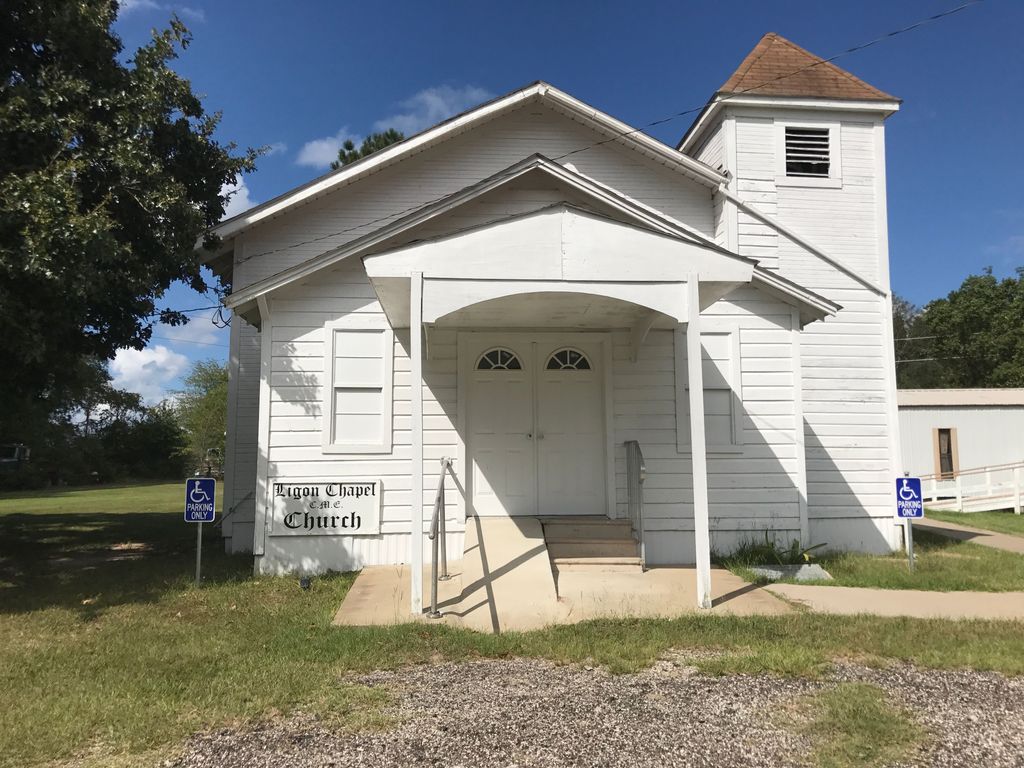
Status: Located
Year Established: Unknown
Council of Governments: DETCOG
Public History: Trinity County was formed from Houston County in 1850. Already an attractive land opportunity for agriculture and sustenance living, the Trinity County population began to grow significantly with planters and land speculators beginning to migrate from the old southern states during the 1840’s and 1850’s who were in search for better farm lands and economical opportunities.
When the first settlers arrived in Trinity County the land was found to have abundant rivers, streams, rich bottom lands and a massive forest of the majestic Long Leaf Pines and rich resources of wildlife and a mild climate. A land perfect for planters, large and small farmers from the south moved in and were eager to start new agrarian endeavors. Families began to edge out of this wilderness a new life and establish their farms and plantations in the newly established State of Texas. There were already hundreds of Mexican Land Grants issued in what was to become Trinity County and hundreds more took advantage of the free lands offered in Bounty and Head Right grants for participation in the fight for Texas freedom and early settlement in the beginning years of the Republic of Texas.
The settlers brought their families, livestock, possessions and their slaves. Though they settled on lands all over the county, many of planters, mostly from Alabama, Mississippi and Louisiana, settled in an area by the Alabama Creek area, located in the north and east parts of the county. It was near there that the first county seat of Sumpter was located. Another area that attracted many of the early people was the Trinity River bottom located in the southern part of the county.
Though forming the county in 1850, citizens living in the newly formed Trinity County were enumerated in the Houston County 1850 US Federal Census, and the 1850 Slave Schedule. Later in 1860, the US Census and Slave Schedule were enumerated as Trinity County and it became easier to determine different districts and population density.
The 1860 Trinity County Slave Schedule reveals there were 136 slave owners accounting for 955 slaves. After June 19, 1865, the 1870 US Census, which was the first census to enumerate African Americans, revealed the population of African Americans then residing in Trinity County to be about 1069. It was between June 19, 1865, date of emancipation in Texas, and 1870 when the freedom colony of Nigton was established. Nigton is located on present day Farm to Market Roads 2501 and 2262, about 5 miles east of Apple Springs in the north east part of the county.
The Nigton community, formed from the former slaves of the white plantation owners of the area, was located in Precinct Four, east of the town called Apple Springs in the northeast section of Trinity County. By proximity to white land owners of the area who previously had owned slaves, it is obvious in the 1870 US Census that many of the freed slaves remained in this area close to those prominent white farmers and former slave owners working as farm laborers or engaging in share cropping. The 1870 US Census enumerates about 100 African American people living in the general vicinity of the newly formed freedom colony that was named Nigton, just a few miles from Apple Springs. According to that same 1870 census there are three African American men and their families in this area listed as Farmers and having Real Estate Values; John Mark, with a Real Estate Value of $400.00, Sam Chapman, with a Real Estate Value of $200.00 and Monroe Mark, with a Real Estate Value of $400.00.[1] Owning real estate was quite significant in the early years of freedom and the beginning of property ownership for many more in the future. Soon after 1870 many of the African American citizens of Nigton area began to buy land and apply for the Preemption Land Grants offered by the state of Texas between 1866 and 1898.[2] The community began to thrive after 1880 with unity and diverse agricultural and civic affairs. By the 1880 US Census enumeration a number of African American’s from the 1870 census still resided in the same area and established as farmers and laborers. The 1880 US Census for Precinct 4 shows the Nigton area had population had grown to about 230 people.[3] The community peaked culturally and intellectually from about 1890 through the 1930’s and was the largest black community in the county. In the years 1922 through 1924, several articles about the Nigton community were published in the “Texas Towns” section of the Dallas Express, a weekly newspaper for Negroes out of Dallas, Texas.
READ MORE :
https://usgenwebsites.org/TXTrinity/nigtonhistoricalnarrative.htm
https://tshaonline.org/handbook/online/articles/hnn24
Community History: There are no current community descriptions of Nigton. Please consider sharing your own knowledge of the community with us.